
Link in Bio vs. Website: Which One Should You Use in 2026?
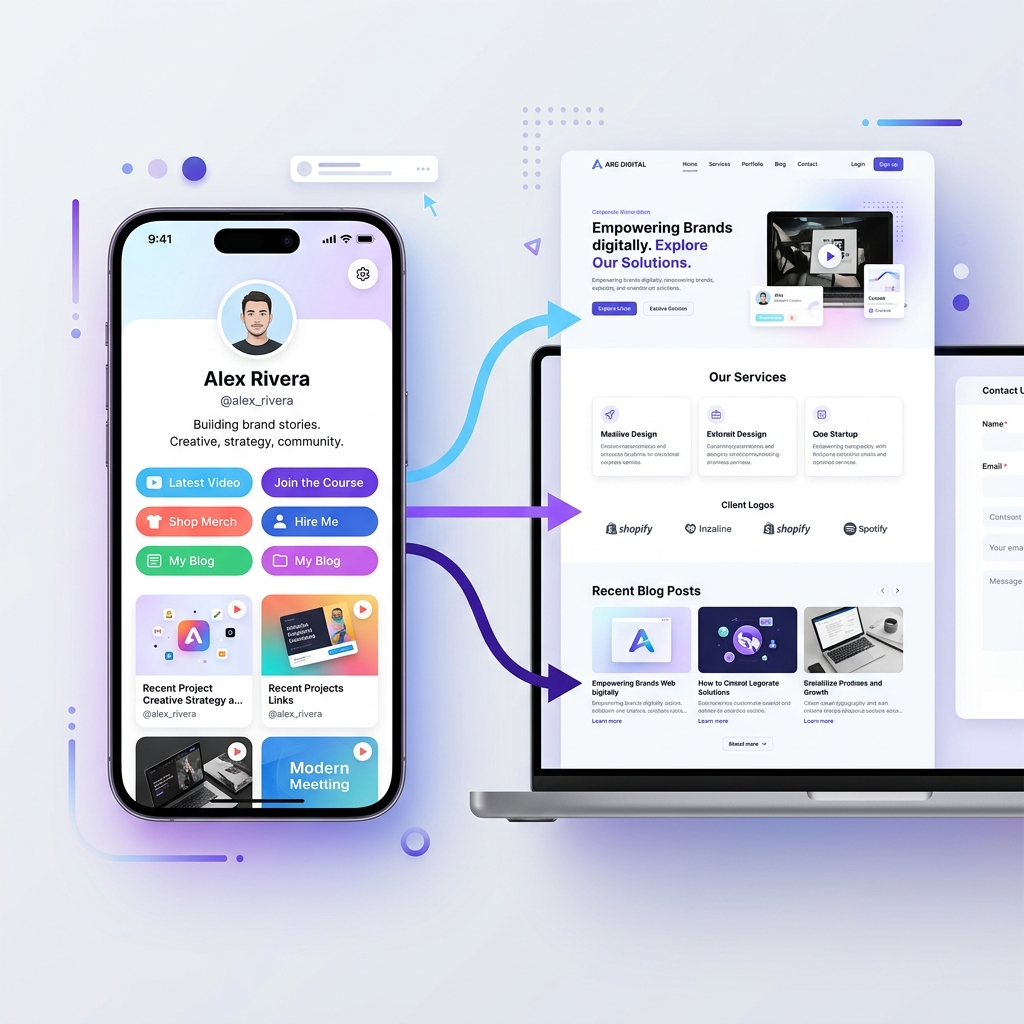
If you create content, run an online business, or build a personal brand across Instagram, TikTok, YouTube, X, or LinkedIn, you have likely asked yourself this fundamental question:
“Do I really need a full website, or is a modern Link in Bio hub enough?”
In the early days of social media marketing, the choice was simple. Social platforms limited you to a single hyperlinked field in your bio, so creators either pasted a link to their homepage or used a basic link aggregator listing 10 different URLs.
Fast forward to 2026: user browsing behavior has fundamentally shifted. Over 85% of social media traffic takes place on mobile smartphones inside in-app web browsers. Mobile users operate with short attention spans and demand instant load times, zero navigation friction, and immediate access to key resources.
At the same time, full-fledged custom websites have evolved into complex, multi-page platforms designed for long-form desktop browsing, search engine optimization (SEO), and corporate validation.
So, which one should you use? Should you spend weeks and thousands of dollars building a full website, or launch a light-themed, high-converting Link in Bio hub in 5 minutes?
Let’s break down the core differences, analyze a side-by-side feature comparison, explore real-world use cases, and uncover the winning hybrid strategy used by top digital creators and brands.
1. What Is a Link in Bio Hub? (Core Purpose & Strengths)
A Link in Bio page (also known as a bio link hub or smart micro-page) is a mobile-first digital hub designed specifically to convert social media followers into active buyers, subscribers, and community members.
Instead of overwhelming visitors with complex multi-level menus, header links, and pop-ups, a modern bio link page acts as a streamlined action dashboard.
Key Strengths of a Modern Link in Bio Hub:
- Mobile-First Optimization: Engineered specifically for vertical smartphone screens and embedded social webviews (Instagram, TikTok, YouTube, X).
- Sub-Second Page Load Speeds: Built with lightweight frontend architectures that load in under 1 second, preventing high mobile bounce rates.
- Frictionless Action Pathways: Focuses on 5 to 7 high-value Call-to-Actions (CTAs) like latest video drops, digital product sales, email signups, and booking calendars.
- Rich Media & Inline Interactions: Play music tracks, showcase video teasers, or collect newsletter leads directly on the page without forcing visitors to open new tabs.
- Instant Agility: Marketing teams and creators can update links, swap featured media, or launch new campaign banners in under 30 seconds without code or developers.
2. What Is a Full Website? (Core Purpose & Strengths)
A Full Website (built on platforms like WordPress, Webflow, Shopify, or custom Next.js/React codebases) is a multi-page digital ecosystem designed to establish long-term brand equity, house extensive content libraries, and capture organic search traffic.
Key Strengths of a Full Website:
- Deep Technical SEO & Authority: Houses hundreds of blog posts, landing pages, and long-tail keyword content to rank on Google SERPs.
- Unrestricted Customization & Functionality: Unlimited freedom to build complex web applications, custom databases, multi-category e-commerce stores, and user portals.
- Brand Ownership: Complete control over domain hosting, database architecture, and custom code integrations.
- Comprehensive Organizational Storytelling: Dedicated multi-page layouts for About Us, Case Studies, Careers, Press Releases, and Legal Compliance.
3. Side-by-Side Comparison: Link in Bio vs. Full Website
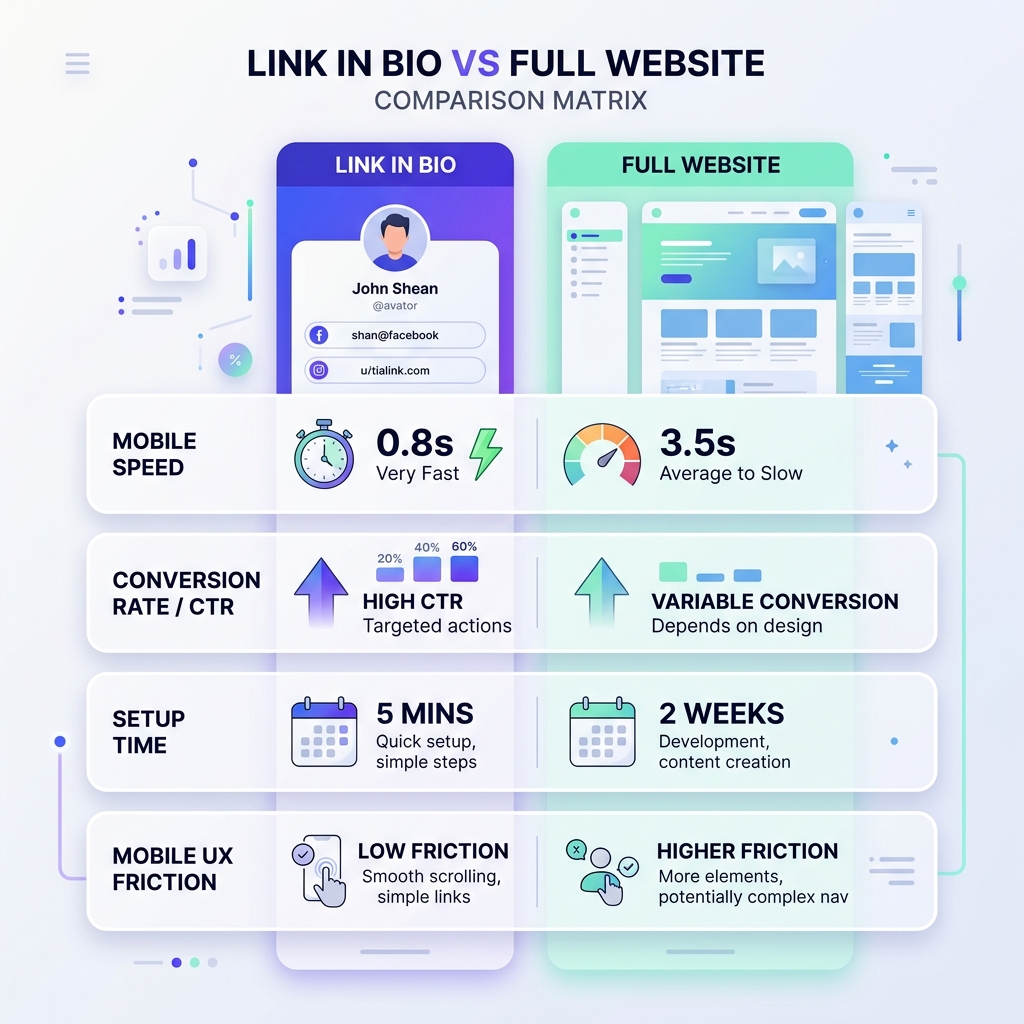
To understand how each platform performs in key business metrics, explore the side-by-side comparison matrix below:
| Performance Metric | ⚡ Link in Bio Micro-Hub | 🌐 Full Custom Website |
|---|---|---|
| Primary Target Audience | Mobile social media scrollers (Instagram, TikTok, YouTube) | Desktop & search engine visitors (Google, Bing, direct traffic) |
| Average Mobile Load Speed | 0.5s – 1.0s (Instant, light-weight) | 2.5s – 5.0s (Dynamic assets, scripts, heavier DOM) |
| Setup & Launch Time | 5 minutes (Zero coding required) | 1 to 4 weeks (Design, development, hosting setup) |
| Mobile CTR & Conversion | High CTR (Focused CTAs, low friction) | Variable CTR (Potential menu navigation clutter) |
| Maintenance Effort | Minimal (Update links in seconds via dashboard) | Ongoing (Plugin updates, security patches, hosting, maintenance) |
| Content Embeds & Lead Capture | Inline forms, video, & music widgets | Multi-page forms, popups, & custom scripts |
| Search Engine Optimization (SEO) | Focused profile SEO & handle ranking | Extensive multi-page organic keyword ranking |
| Typical Upfront Cost | Free to $10/month | $300 to $5,000+ (Design, hosting, domain, dev fees) |
4. When Should You Use Which?
Use a Link in Bio Hub If:
- You Are a Content Creator or Influencer: Your primary audience originates from Instagram, TikTok, YouTube Shorts, or X. You need a fast, visually stunning page to direct fans to your newest video, merch drop, affiliate products, and brand deals.
- You Are Launching a New Business or Side Hustle: You want to start capturing emails, validating product demand, or selling digital services today without waiting weeks for web design.
- You Run Social-First E-Commerce: You run limited product drops or featured items promoted directly via short-form video reels.
- You Want Maximum Mobile CTR: You notice that visitors hitting your full site homepage bounce quickly because of desktop-heavy layouts or slow mobile load speeds.
Use a Full Website If:
- You Depend Heavy on Search Engine Traffic (SEO): Your business growth relies on long-form blogging, technical documentation, or organic Google keyword rankings.
- You Manage a Complex E-Commerce Catalog: You sell hundreds of SKUs requiring faceted filtering, inventory tracking, and complex cart logic.
- You Build Enterprise SaaS or Complex Software: You require user login portals, interactive pricing calculators, custom API documentation, and multi-tier enterprise forms.
- You Require Extensive Legal & Corporate Structures: Large organizations needing multi-country localization, career portals, and investor relations pages.
5. The Winning Hybrid Blueprint: Why the Best Brands Use Both
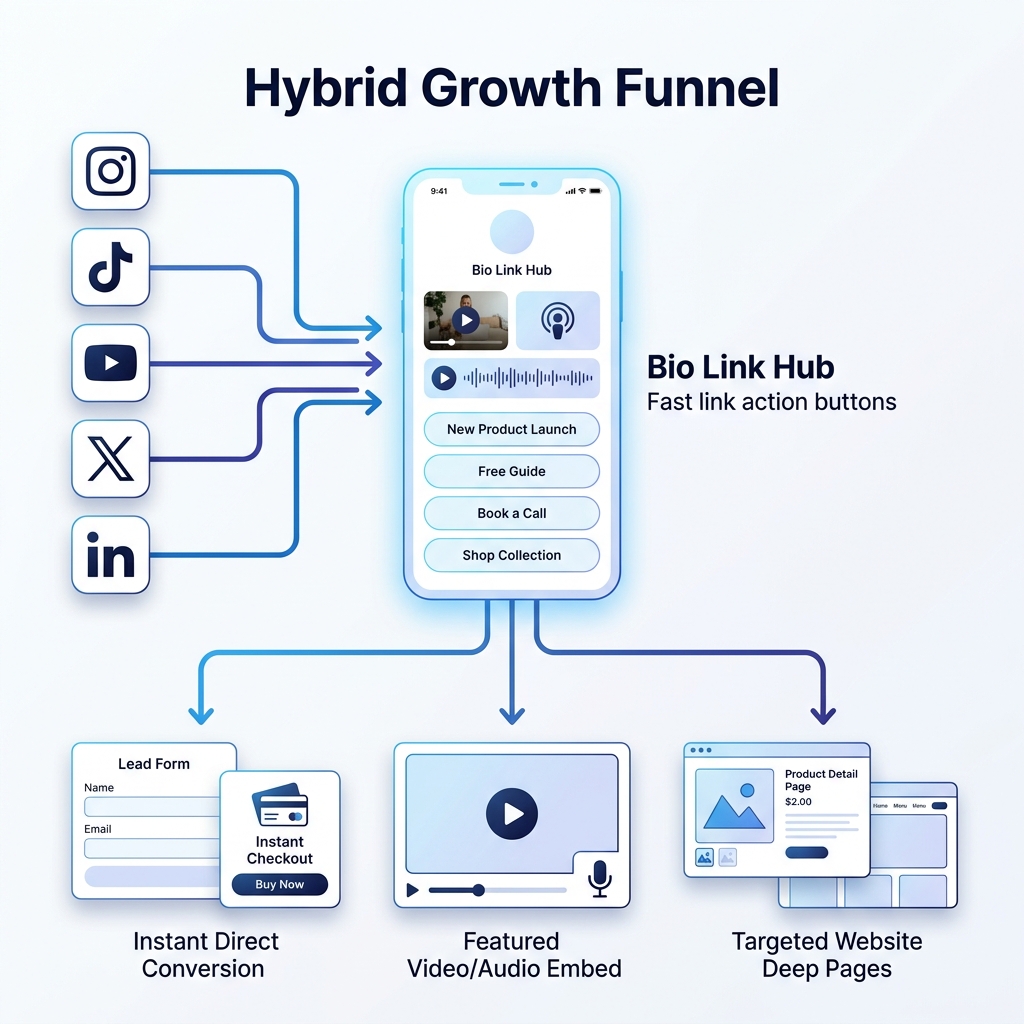
The most successful modern creators, solopreneurs, and digital brands do not treat this as an “either/or” choice. Instead, they implement a Hybrid Growth Funnel.
In a hybrid growth strategy:
- Social Media Platforms (Instagram, TikTok, YouTube, LinkedIn) capture initial attention.
- The Link in Bio Hub acts as the Mobile Gateway Router—a ultra-fast filter page that captures instant conversions (email signups, featured purchases) and directs high-intent users to specific deep pages.
- The Full Website serves as the Depth Engine—housing deep blog content, comprehensive catalog browsing, and enterprise client validation.
Why the Hybrid Funnel Outperforms Static Links:
- Zero Traffic Leakage: Casual social scrollers who only want your free PDF lead magnet get it instantly on your bio page without getting lost in your website’s main menu.
- Deep Intent Routing: Serious prospects who want your complete service portfolio tap your bio link’s “Explore Full Website & Services” button and land on the exact sub-page they need.
- Double Attribution: You capture high-converting social sales while continuing to build long-term domain authority and Google SEO on your root website.
6. How to Build Your Light-Theme Bio Hub in 5 Minutes with OnlyLink
If you want to maximize your social traffic conversion today, setting up a professional, light-themed bio hub takes just a few steps:
- Claim Your Custom Handle: Sign up for free at OnlyLink.click and reserve your personal or brand handle (
onlylink.click/yourname). - Choose a Crisp Light Theme: Select from curated, high-converting light themes with soft ambient gradients, custom typography, and customizable button microcopy.
- Add 5–7 Actionable Links: Focus on your highest-converting goals—your lead magnet signup, featured store product, latest YouTube video, and calendar booking link.
- Embed Interactive Media: Add direct Spotify audio previews, YouTube video cards, or newsletter subscription forms inline so visitors interact without leaving the page.
- Connect First-Party Analytics: Monitor real-time click-through rates (CTR), referral sources, and geographic visitor data right from your dashboard.
- Paste into Your Social Bio: Place your clean OnlyLink URL in your Instagram, TikTok, YouTube, and X profile fields.
Conclusion: Which One Should You Choose?
- If you are starting out or growing primarily on social media: Start with a Link in Bio hub. It gives you an instant, high-converting digital storefront in minutes for zero upfront cost.
- If you are an established brand with heavy search traffic: Use a Hybrid Approach. Keep your full website for SEO and organic search, but place a streamlined OnlyLink bio page in your social profiles to capture mobile social traffic with zero friction.
Ready to turn your social media followers into loyal customers? Create your free OnlyLink page today and transform your social bio into a high-converting growth hub.
Ready to build your link in bio?
Create your free OnlyLink page in under a minute unlimited links, analytics and custom designs.
Get started freeKeep reading
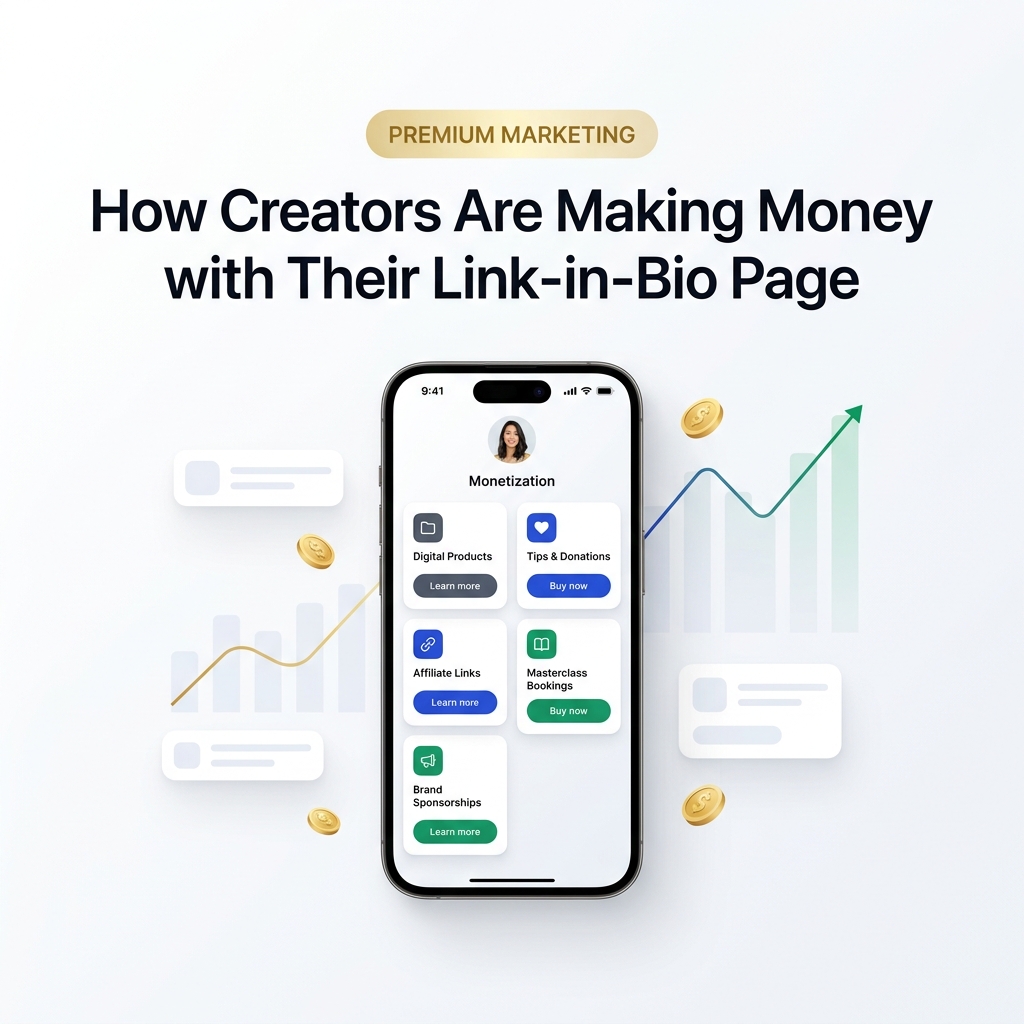
How Creators Are Making Money with Their Link-in-Bio Page
Discover how modern creators turn single bio links into multi-stream revenue hubs. Learn the top monetization …
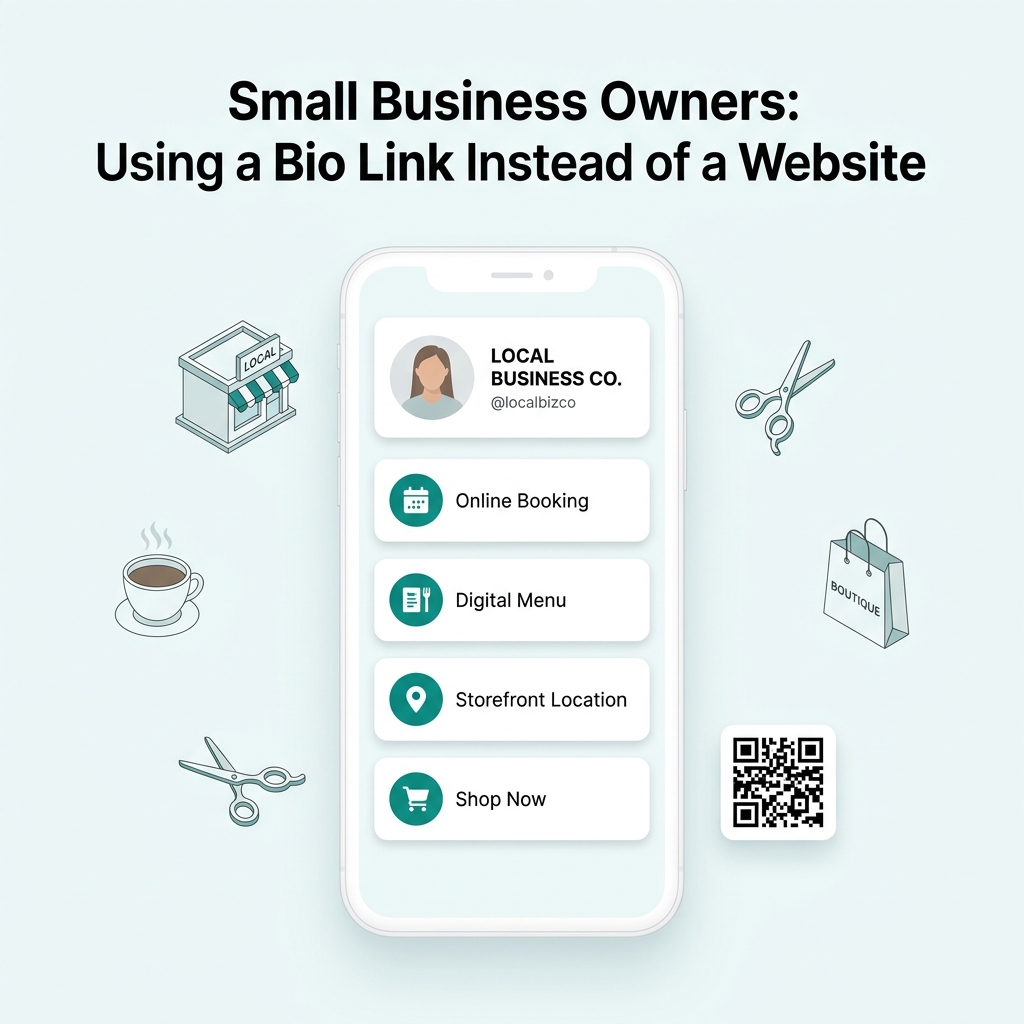
Small Business Owners: Using a Bio Link Instead of a Website
Discover why small business owners are replacing expensive, complex websites with streamlined Bio Link …